Responsible material handling
Reducing waste. Retaining material value.
For branded or sensitive textiles that cannot safely be reused, responsible handling starts with secure destruction. This removes the risk of items re-entering circulation in their original form while preparing suitable materials for further processing.
Recovering useful fibres can keep material in use and provide an alternative to virgin resources in suitable products. Our aim is to make better use of destroyed textiles, with recovery routes chosen around the material rather than a single solution for every load.
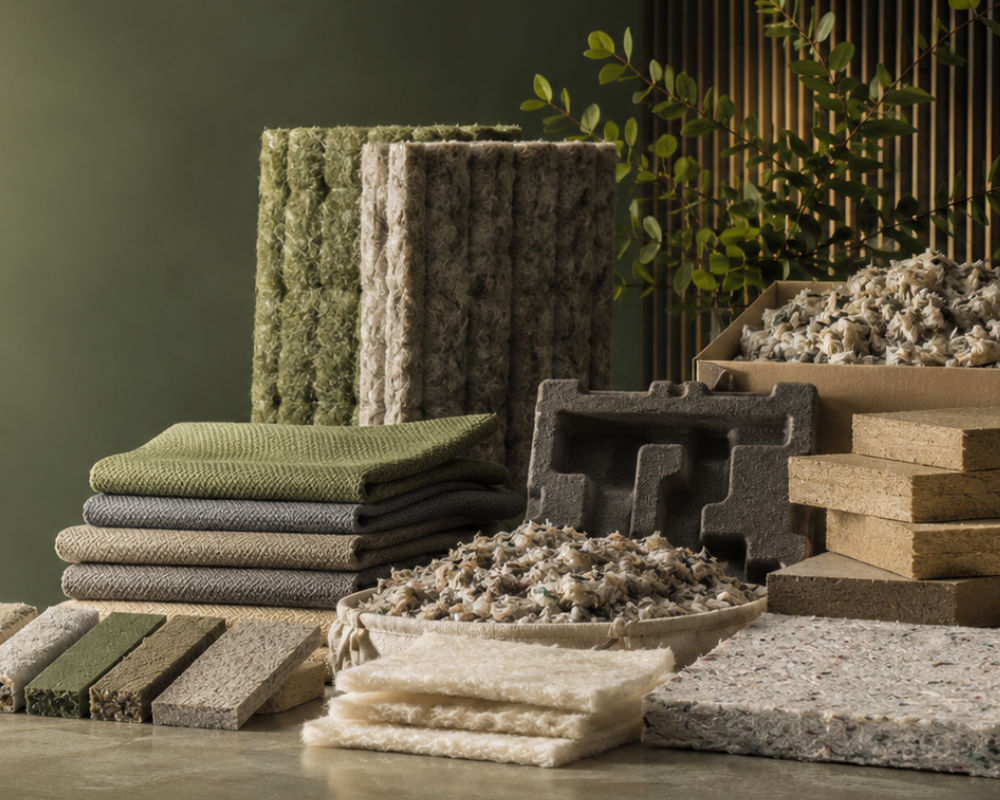
Depending on their composition and processing requirements, suitable recovered textiles may have applications in industrial wiping or shredded textile filler. Recovery routes are assessed around the materials and the agreed destruction requirements.
Fibre composition, garment construction and contamination all affect what is possible. We assess these factors against the receiving process and discuss suitable options for each project, so recovery expectations are clear from the start.
See our secure destruction processResearch and collaboration
Through Roberts Group International, we work with material innovators, manufacturers and recovery partners to explore new uses for end-of-life textile fibres. Combining expertise in textile processing and product development helps turn promising ideas into practical recovery routes.
That work includes evaluating material performance, processing requirements and opportunities to scale. The aim is to develop useful applications that retain material value and can work beyond a pilot project. The Textiles to MDF project below is one example of this approach.
Textiles to MDF
A practical example of circular innovation
Roberts Group International and FAB Materials have produced pilot MDF boards incorporating fibres from non-rewearable textiles, replacing a proportion of virgin timber fibre.
The project has progressed to a prototype coffee table made using 30% recycled textiles. It demonstrates a tangible recovery application, with further work focused on scaling production and suitable material streams.
Explore the Textiles to MDF projectOther potential applications
Alongside MDF boards, suitable recovered materials may enter other processing routes. Applications depend on material suitability and available recovery partners.
Industrial wiping cloths
Suitable absorbent textile fibres can be processed into wiping materials.
Punchbag filler
Selected destroyed textiles can provide filling material for suitable products.
Acoustic insulation
Recovered fibres may be suitable for acoustic and insulation applications.
Protective packaging
Selected material streams may support cushioning and protective applications.
We will discuss the appropriate handling and reporting requirements for your materials. Recovery outcomes should be agreed for the particular project rather than assumed for every consignment.